
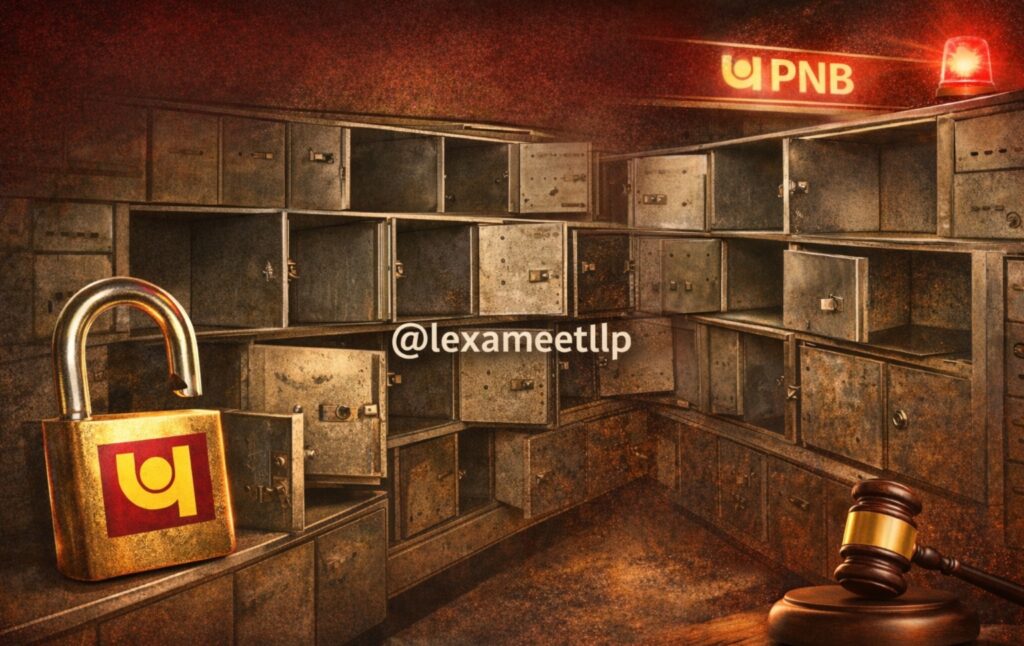
Empty Lockers Scandal at Punjab National Bank, Delhi: A Shocking Breach of Trust and Legal Accountability Crisis
Introduction A deeply disturbing incident has recently surfaced from Delhi involving Punjab National Bank (PNB), where several customer lockers were found completely empty. Customers who had entrusted their valuable jewellery, cash, and confidential documents to the bank were left stunned when they discovered that their lockers had been unlawfully accessed and cleared. This shocking event has raised serious concerns regarding the safety of bank lockers and the accountability of financial institutions entrusted with public wealth. The Incident: When Security Failed Reports indicate that multiple locker holders at a Delhi branch of Punjab National Bank found their lockers open and entirely vacant. The missing valuables included gold ornaments, family heirlooms, cash reserves, and important legal documents. The discovery triggered panic, protests, and complaints, compelling authorities to initiate investigations. The incident exposes a grave breakdown of internal controls and highlights glaring lapses in surveillance, access monitoring, and operational integrity. Breach of Fiduciary Duty and Legal Responsibility Banks offering locker facilities enter into a bailor–bailee relationship with their customers under the Indian Contract Act, 1872. This relationship legally obligates the bank to exercise the highest degree of care in safeguarding locker contents. Any loss caused due to negligence, weak security, or staff misconduct directly attracts legal liability. The PNB locker incident clearly demonstrates a breach of this fiduciary obligation, making the bank answerable under both civil and criminal law. Violation of RBI Guidelines on Locker Management The Reserve Bank of India (RBI) issued comprehensive guidelines in 2021 mandating strict locker safety measures. These include CCTV surveillance, dual authentication systems, access logging, audit trails, and periodic inspections. Banks are also required to ensure enhanced security infrastructure and operational transparency. Any deviation from these guidelines is treated as regulatory non-compliance. The scale of the loss in this case strongly suggests systemic failure in implementing RBI-mandated safety norms. Criminal Dimensions of the Incident Where locker contents vanish without customer authorization, serious criminal offences may be attracted. These include criminal breach of trust, cheating, and conspiracy, especially if internal collusion or procedural manipulation is discovered. If bank officials or outsourced personnel are found involved, stringent criminal prosecution may follow. The case, therefore, carries significant implications not only for institutional liability but also for individual criminal accountability. Consumer Protection and Compensation Rights Under the Consumer Protection Act, 2019, locker holders qualify as consumers and banks are service providers. Loss of locker contents due to negligence constitutes deficiency in service, entitling customers to compensation for the value of lost items, mental agony, and litigation costs. RBI guidelines further impose strict liability on banks, requiring them to compensate customers up to 100 times the annual locker rent or the actual loss suffered, whichever is higher, in cases of proven negligence. Landmark Judicial Precedents Strengthening Locker Holder Rights The judiciary has consistently upheld the rights of locker holders and imposed strict liability on banks for locker-related losses. In Amitabha Dasgupta v. United Bank of India (2021), the Hon’ble Supreme Court categorically held that banks act as custodians of locker contents and are under a strict legal obligation to ensure their safety. The Court ruled that banks cannot escape liability by pleading ignorance of locker contents and must compensate customers for losses arising due to negligence. Further strengthening this principle, the STATE CONSUMER DISPUTES REDRESSAL COMMISSION, UTTAR PRADESH, LUCKNOW, in COMPLAINT NO. 196/2019 (Neeru Singh vs Union Bank of India), decided on 21/12/2022, held the bank liable for deficiency in service where the customer’s locker was found empty. The Commission observed that: “Banks are duty-bound to maintain the highest level of security in locker operations. Failure to protect the contents of customer lockers constitutes gross negligence and deficiency in service, making the bank liable for full compensation.” The Commission awarded monetary compensation, damages for mental agony, and litigation costs, reaffirming the principle that customer asset protection is a non-negotiable obligation of banks. Legal Remedies Available to Affected Customers Customers impacted by such locker incidents can pursue multiple legal remedies, including lodging criminal complaints before the police, filing consumer complaints for compensation, initiating civil recovery suits, approaching the RBI Banking Ombudsman, and filing writ petitions before High Courts in cases of systemic regulatory failure. A strategic combination of criminal and civil actions can ensure both accountability and adequate compensation. Need for Institutional Reform and Accountability This alarming incident underscores the urgent need for banking institutions to strengthen locker management systems, upgrade surveillance infrastructure, ensure transparent access control, and conduct frequent audits. Regulatory bodies must also conduct forensic inspections and enforce strict compliance to prevent recurrence. Public trust in the banking system depends fundamentally on asset safety, and any compromise shakes the very foundation of financial stability. Conclusion The empty locker scandal at Punjab National Bank, Delhi represents a grave breach of customer trust and a serious failure of banking security mechanisms. Judicial precedents such as Amitabha Dasgupta v. UBI (2021) and Neeru Singh vs Union Bank of India (Complaint Case No. 196 of 2019) have firmly established that banks carry strict legal liability in such matters. Customers must be empowered to assert their legal rights, and banks must be compelled to adopt zero-tolerance policies towards security lapses. Only through strict legal enforcement and institutional reform can confidence in the banking system be restored. For more info reach us on: www.lexameet.comM: 9305354673